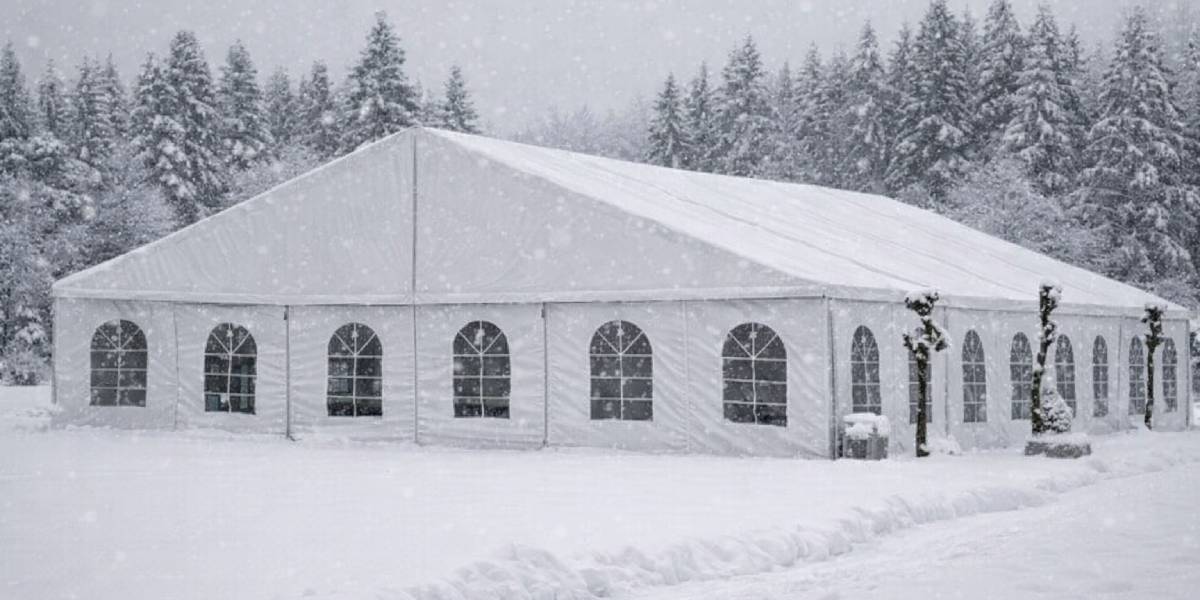
When a sudden snowfall hits a tensile structure or marquee, it is essential to prevent snow accumulation from generating dangerous overloads on the PVC roof covering. The risk does not only concern deformation of the membrane: operational shutdowns may occur and, in the most serious cases, structural failures. The issue is that snow rarely distributes evenly: a simple depression or a colder area is enough to turn the accumulation into a critical point.
To manage these situations, one of the most effective solutions is the Thermal Technology PVC Snow-Melting Sheet. It is a heated membrane specifically designed for PVC roofs: it warms the roof surface, promotes the melting of snow and ice, and helps reduce the risk of abnormal loads.
How it works
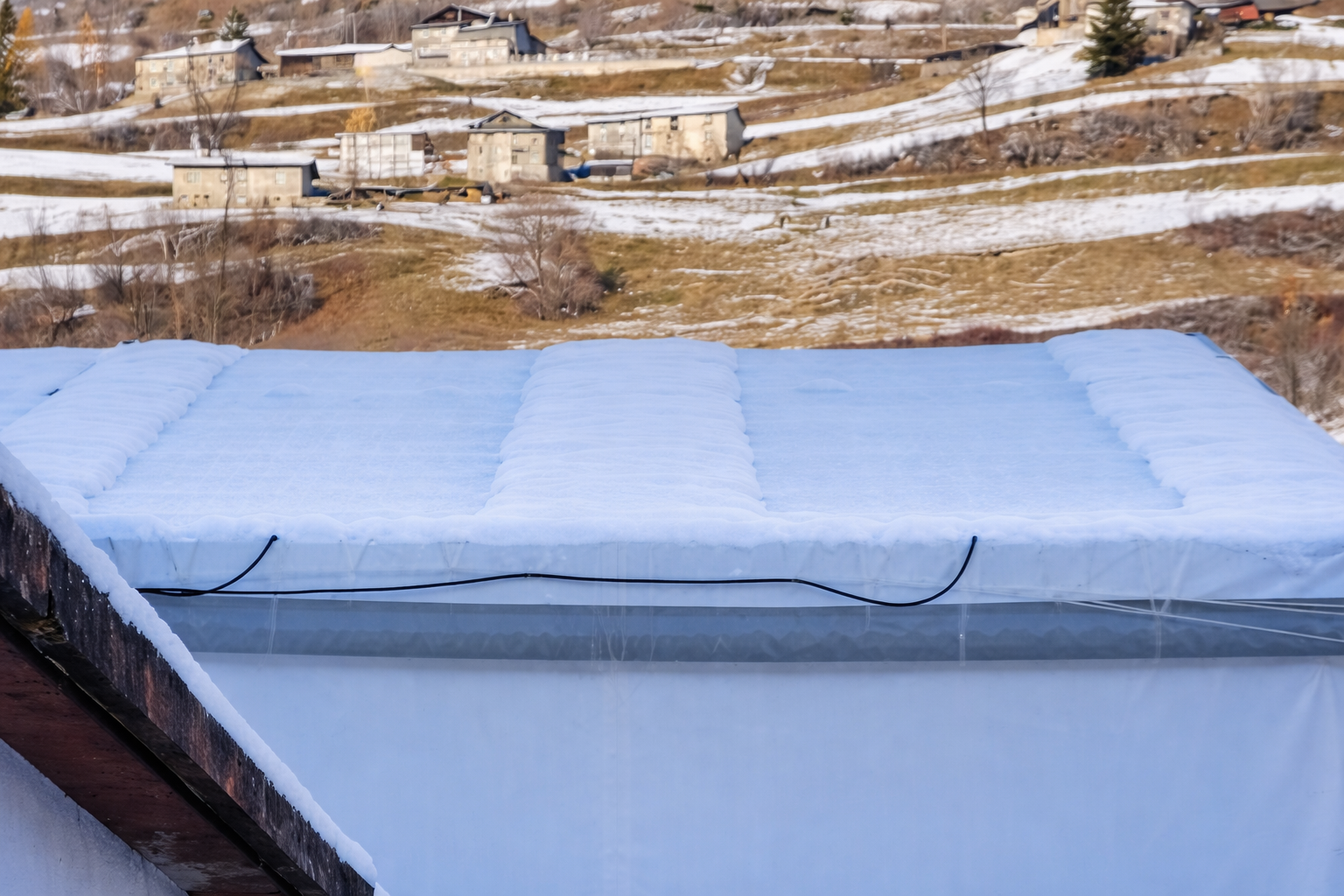
The sheet integrates reinforced carbon fiber resistors within its layered structure, between PVC and technical fabrics. This configuration results in a flexible and stable solution, also suitable for temporary installations. It can be activated during snowfall to limit accumulation, or after deposition to accelerate melting and restore safer roof conditions.
Why it is suitable for tensile structures and temporary marquees
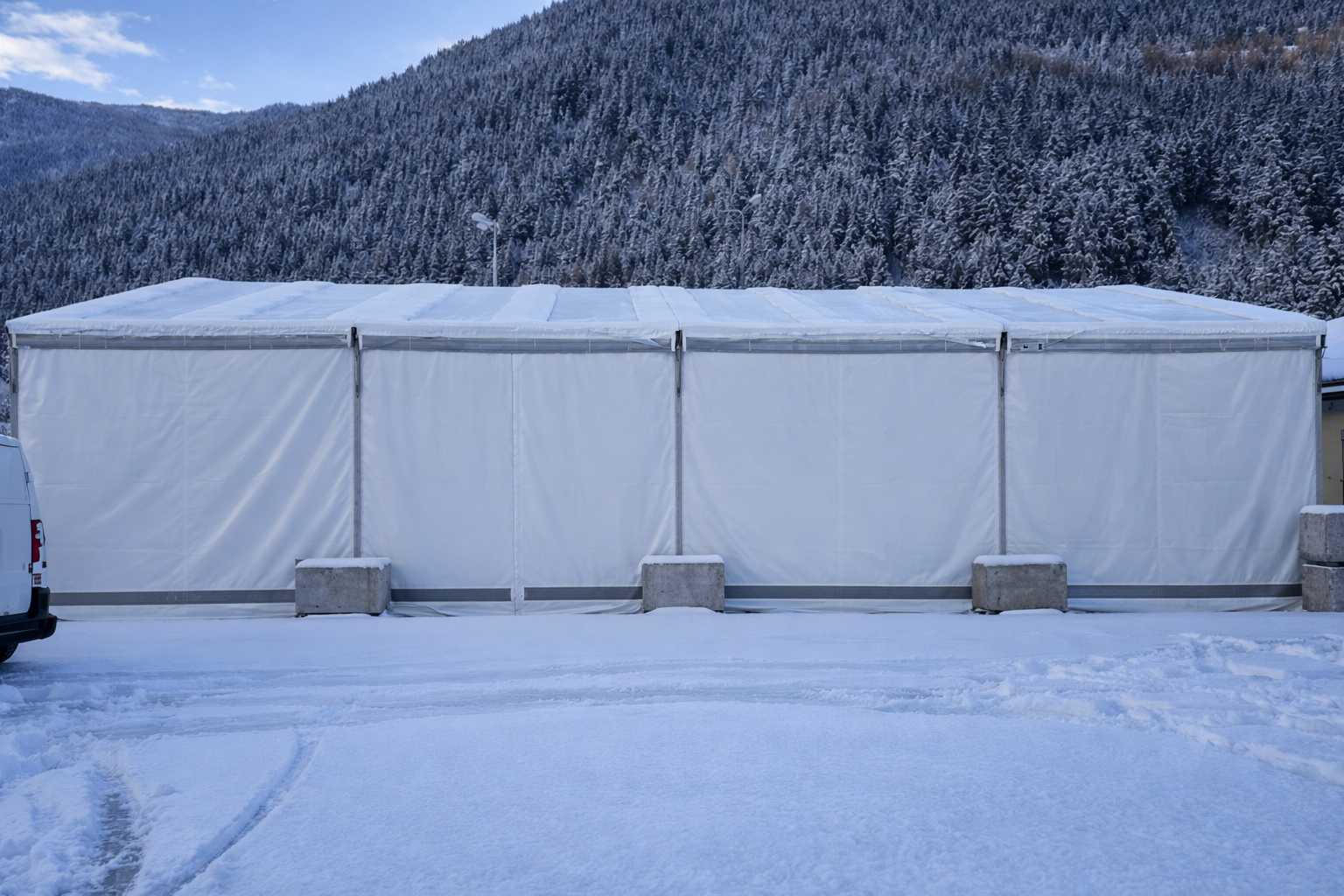
One of the most significant advantages is operational management. The sheet is designed to be lightweight and practical during assembly and disassembly, with Ø 10 mm perimeter eyelets for tensioner attachment. In addition, it is custom-made to fit the specific dimensions of the roof, ensuring thermal distribution consistent with the roof geometry.
Where it makes a difference
It is particularly useful in all contexts where the structure must remain operational during winter:
- Events and exhibitions: festivals, fairs, markets, food areas. The goal is to avoid sudden closures and maintain manageable roof conditions.
- Industry and logistics: shelters for equipment and materials, covered loading/unloading areas, temporary storage. Reducing accumulation helps protect assets and ensure operational continuity.
- Construction sites and temporary technical structures: covers for processing, maintenance, and weather-exposed work areas. Preventing accumulation reduces urgent interventions and risks to personnel.
- Lightweight and modular covers: gazebos and seasonal installations, where rapid response is essential when weather conditions change.
The advantages of carbon fiber technology
The Thermal Technology carbon fiber used in the resistors is patented, flexible, non-oxidizing, stable under temperature variations, and maintains its electrical properties over time. This results in a solution designed to last and to require limited routine management, achieving a balanced combination of thermal performance and energy consumption.
Conclusion
When the goal is to manage snow and ice on PVC roofs without turning every snowfall into an emergency, the Thermal Technology PVC Snow-Melting Sheet allows direct intervention where it is needed, with a custom solution designed for safety, operability, and continuity of use.
Go to the product Thermal Technology PVC Snow-Melting Sheet